

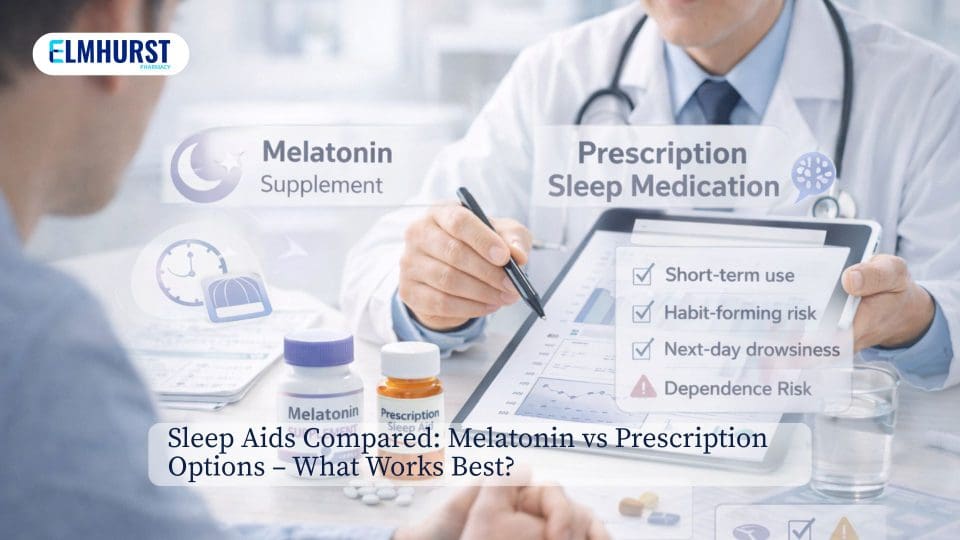
Sleep difficulties affect millions of adults each year. Trouble falling asleep, staying asleep, or waking too early can impact mood, concentration, immune function, and overall health.
When lifestyle adjustments are not enough, many individuals consider sleep aids. These generally fall into two categories:
- Over-the-counter (OTC) options such as melatonin
- Prescription sleep medications
This guide compares melatonin and prescription sleep aids, outlining how they work, their benefits, potential risks, and factors to consider when choosing the right option.
Understanding Sleep Problems
Occasional sleeplessness is common. However, chronic insomnia may require medical attention.
Common causes of sleep disruption include:
- Stress and anxiety
- Shift work
- Jet lag
- Hormonal changes
- Chronic pain
- Certain medications
- Underlying medical conditions
Identifying the cause of sleep disturbance is important before selecting a treatment.
What Is Melatonin?
Melatonin is a hormone naturally produced by the brain in response to darkness. It helps regulate the body’s sleep-wake cycle (circadian rhythm).
As a supplement, melatonin is widely available over the counter and is commonly used to support sleep.

How Melatonin Works
Melatonin does not function as a sedative. Instead, it signals to the body that it is time to prepare for sleep.
It is most effective for:
- Jet lag
- Shift work sleep disorder
- Delayed sleep phase disorder
- Mild difficulty falling asleep
It is generally not as effective for staying asleep throughout the night.
Also Read: What Are Biosimilars? A Patient’s Guide to New Medication Options
Benefits of Melatonin
- Available without a prescription
- Non-habit forming
- Generally well tolerated
- Useful for circadian rhythm-related sleep issues
Common side effects are typically mild and may include:
- Headache
- Dizziness
- Daytime drowsiness
- Vivid dreams
Because melatonin is classified as a dietary supplement, product quality and dosing consistency may vary.
Prescription Sleep Medications
Prescription sleep medications are typically used for moderate to severe insomnia that does not improve with behavioral changes.
Common prescription sleep medications include:
- Zolpidem
- Eszopiclone
- Temazepam
- Trazodone
These medications work differently than melatonin and directly affect brain chemicals that regulate sleep.
How Prescription Sleep Aids Work
Depending on the medication, prescription sleep aids may:
- Help initiate sleep
- Improve sleep duration
- Reduce nighttime awakenings
Some act quickly and are intended for short-term use. Others may be prescribed for longer management under medical supervision.
Benefits of Prescription Sleep Aids
- Stronger effect for persistent insomnia
- May improve total sleep time
- Regulated dosing and quality
- Clinically studied for safety and effectiveness
Risks and Side Effects of Prescription Options
Prescription sleep medications may cause:
- Next-day drowsiness
- Dizziness
- Memory disturbances
- Sleepwalking or unusual sleep behaviors
- Risk of dependency (with certain medications)
For this reason, many prescription sleep aids are recommended for short-term use unless otherwise directed by a healthcare provider.
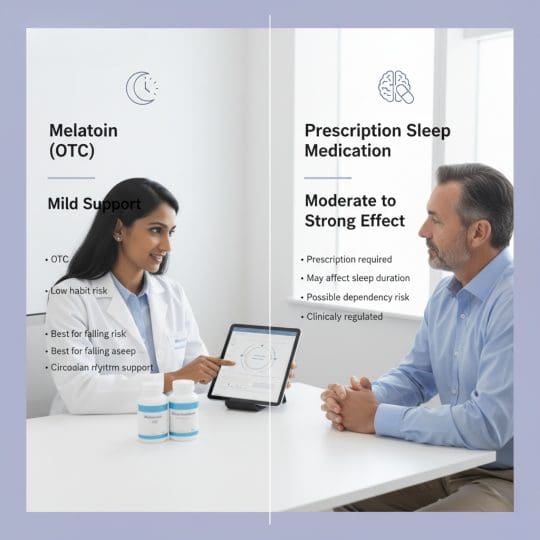
Melatonin vs Prescription Sleep Aids: Key Differences
| Feature | Melatonin | Prescription Sleep Aids |
| Availability | Over-the-counter | Prescription required |
| Strength | Mild | Moderate to strong |
| Best For | Circadian rhythm issues | Chronic insomnia |
| Habit-Forming Risk | Low | Possible (varies by drug) |
| Regulation | Dietary supplement | FDA-regulated medication |
The most appropriate option depends on the severity and underlying cause of sleep problems.
When to Consider Melatonin
Melatonin may be appropriate if:
- Sleep issues are mild
- Difficulty is primarily falling asleep
- Sleep disruption is related to schedule changes
- You prefer a non-prescription option
Melatonin should be taken 30–60 minutes before bedtime, following recommended dosing guidelines.
Also Read: How to Use Pharmacy Services to Stay Healthy This Season
When to Consider Prescription Treatment
Prescription sleep aids may be appropriate if:
- Insomnia is chronic (lasting 3 months or longer)
- Sleep disruption significantly affects daily functioning
- OTC options have not been effective
- There is an underlying medical or psychiatric condition
A healthcare provider will evaluate medical history and current medications before prescribing treatment.
Non-Medication Strategies for Better Sleep
Regardless of which sleep aid is used, healthy sleep habits are essential.
Recommended sleep hygiene practices include:
- Maintaining consistent sleep and wake times
- Limiting screen use before bed
- Avoiding caffeine late in the day
- Creating a cool, dark sleep environment
- Engaging in regular physical activity
Cognitive Behavioral Therapy for Insomnia (CBT-I) is also considered a first-line treatment for chronic insomnia.
Safety Considerations
Before starting any sleep aid, discuss with your healthcare provider or pharmacist if you:
- Are pregnant or breastfeeding
- Take other medications
- Have sleep apnea
- Have depression or anxiety
- Have liver or kidney conditions
Sleep medications may interact with other treatments.
Summary
Melatonin and prescription sleep medications serve different purposes.
Melatonin is best suited for circadian rhythm-related sleep issues and mild difficulty falling asleep. Prescription options may be necessary for moderate to severe or chronic insomnia.
Choosing the right sleep aid depends on individual symptoms, medical history, and treatment goals.
If you are experiencing ongoing sleep problems, consult a healthcare provider for a proper evaluation and guidance on appropriate treatment options.
Medical Disclaimer
This information is for educational purposes only and does not constitute medical advice. Always consult a licensed healthcare professional before starting, stopping, or changing any sleep medication or supplement.